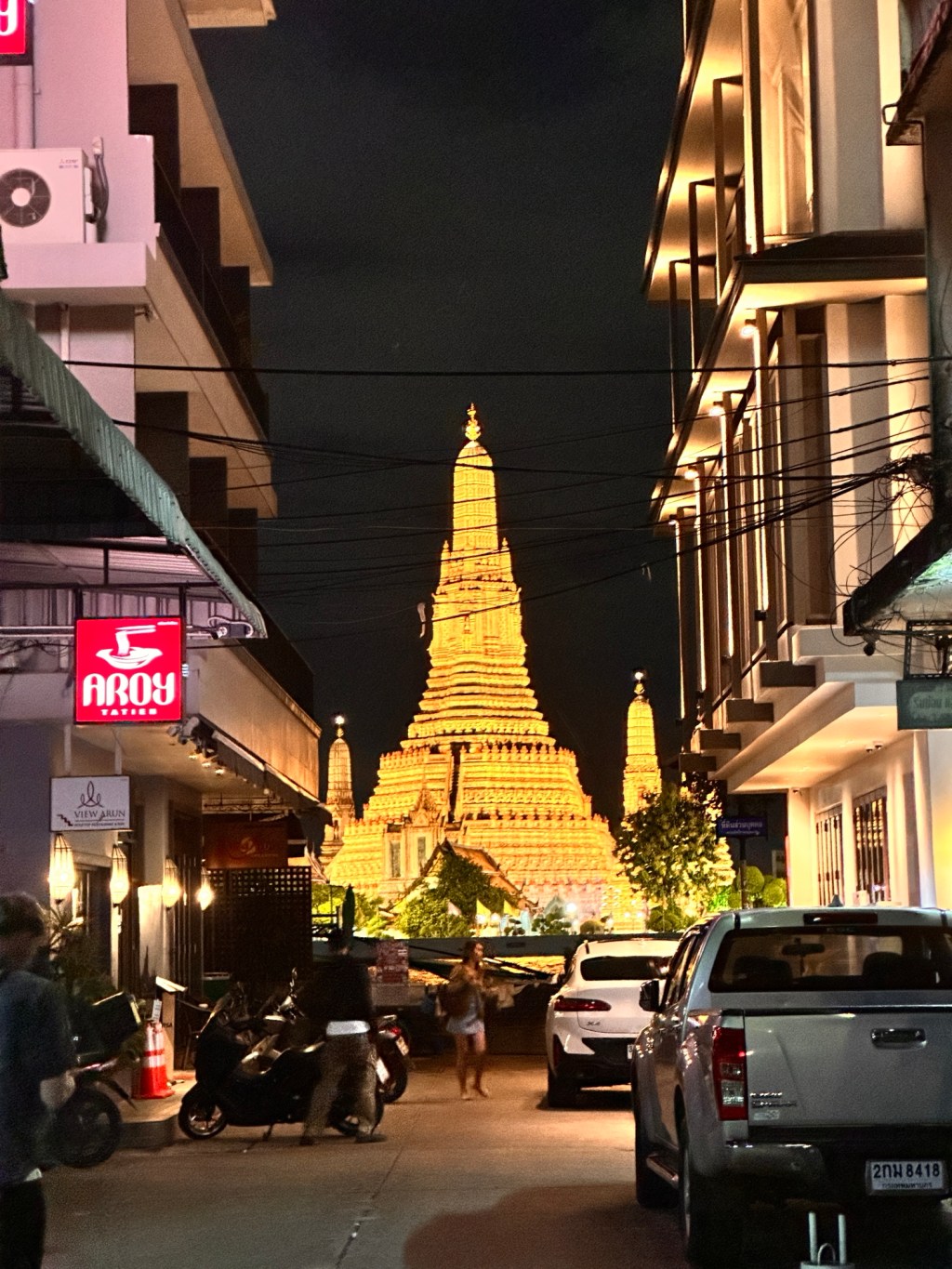
A Lot of Eating, a Little Chaos, and One Train That Got Uncomfortably Close
Bangkok is loud, sweet, chaotic, and deeply edible. It’s a city where a cup of Thai tea can stop you in your tracks and a train can come within inches of your face—sometimes in the same afternoon. I came hungry and curious and left very full, slightly overstimulated, and already planning what I’d eat next.
Food First (Always)
Michelin Street Food
If you’re in Bangkok, I highly recommend doing a food tour––especially your first night so you can revisit any favorites later. This city is a hub for some of the best street food on the planet, and you can even do tours focused on Michelin-recommended spots, which is what we ended up doing.
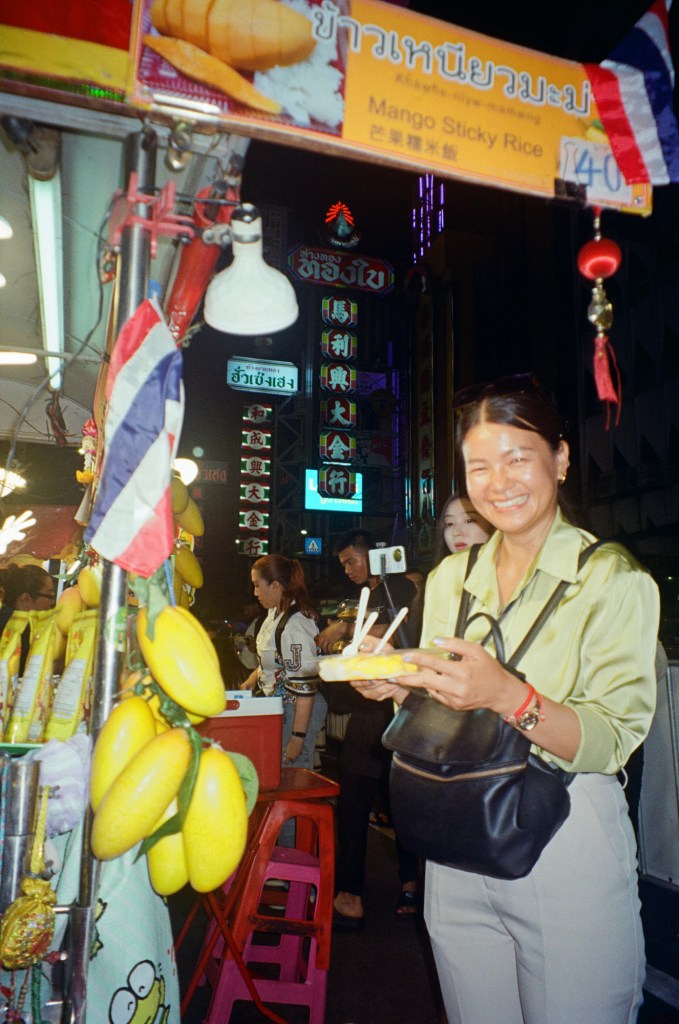
Most of the food was a hit, and our guide, Eve, was fantastic—friendly, flexible, and more than happy to let us detour through Chinatown stalls based on what we were craving. We were full before we were even halfway through. Truly. Pace yourself. You will not leave hungry.
We booked our food tour for $36pp with Get Your Guide here.
Supanniga Eating Room – Tha Tien
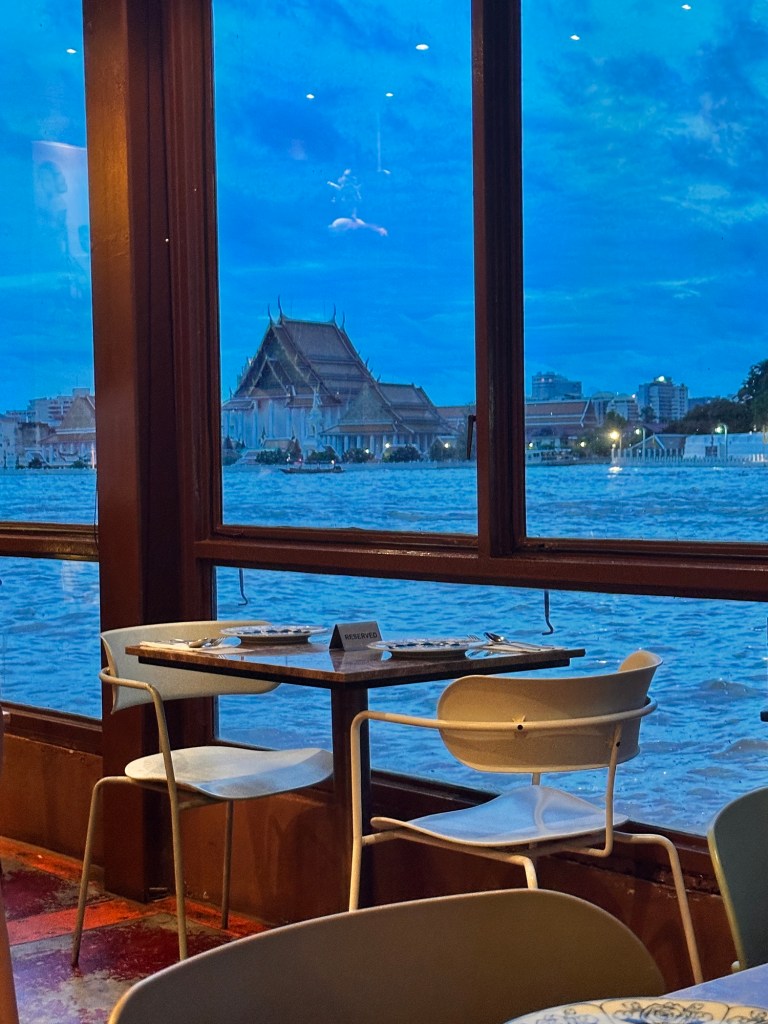
Supanniga sits right on the Chao Phraya River with a direct view of Wat Arun glowing across the water, especially beautiful at sunset. The service was excellent, and it was one of the few Michelin Guide restaurants near us that fit our tight budget.
What to order:
- Ka Lum Tod Nam Pla: fried Chinese cabbage that somehow manages to be simple and unforgettable.
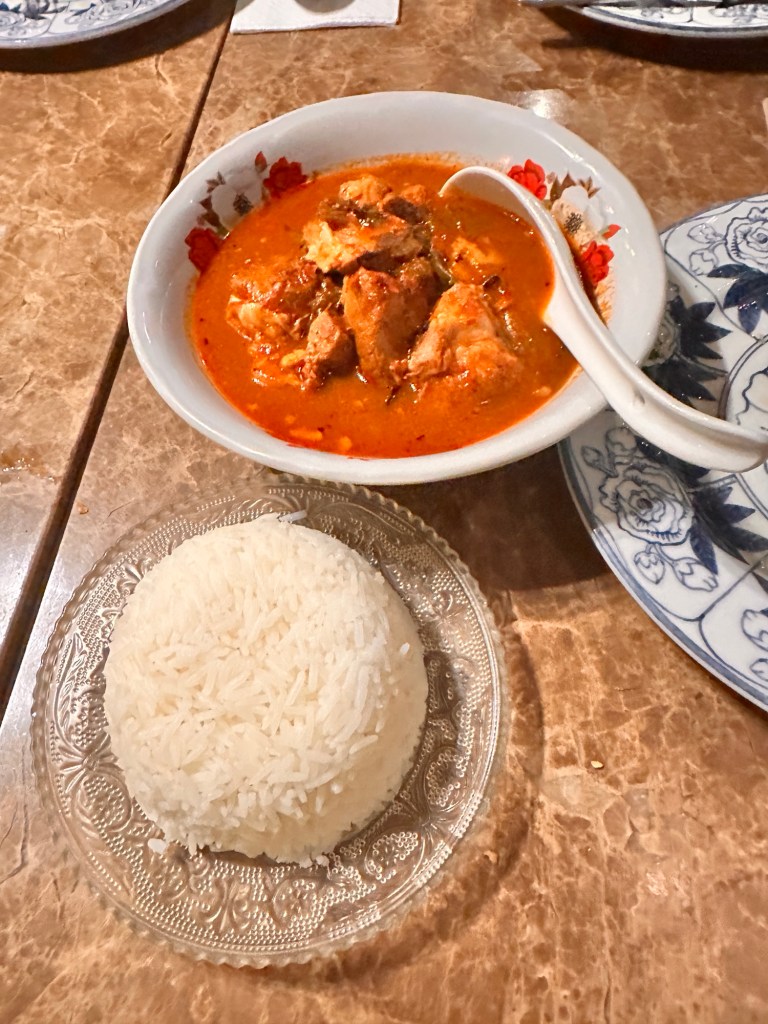
- Moo Cha Muang: their signature dish—tender pork stew infused with Thai herbs and rich, comforting flavors.
Somtum Der, Tha Tien
Just around the corner is another Michelin-recommended favorite that’s been recognized seven years in a row. The rooftop is practically next door to our hostel’s rooftop, with some of the best views in the area.
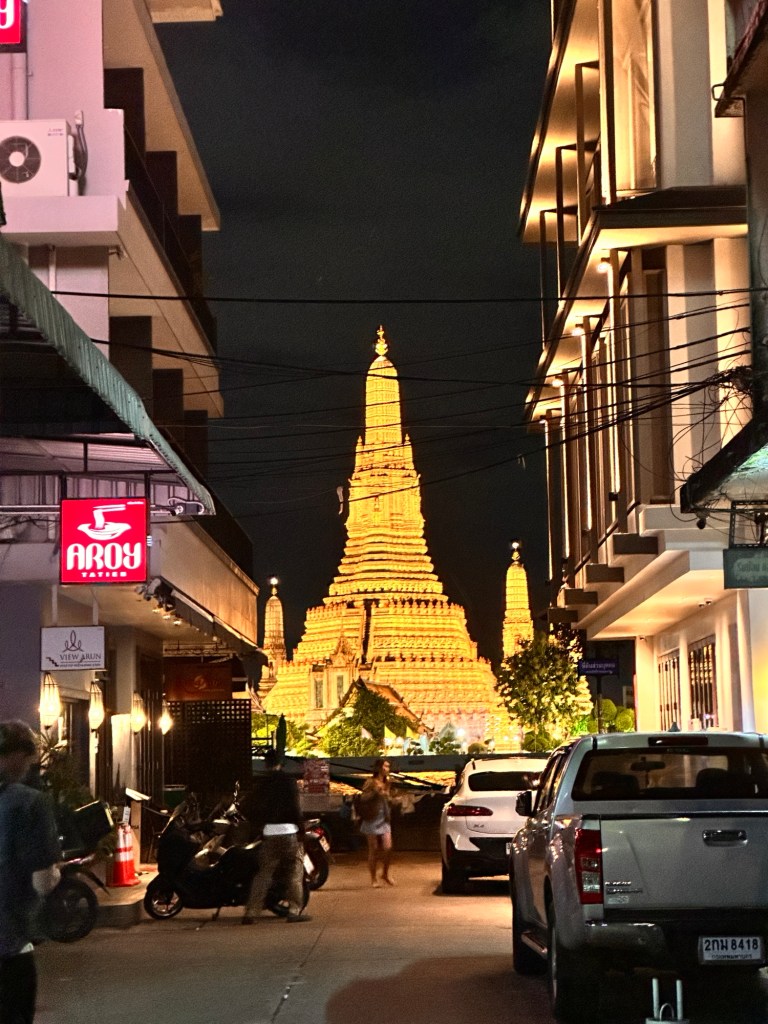
I loved it so much I almost went back a second time—but ran out of time. Luckily, they’re on Grab (Southeast Asia’s Uber/UberEats), so delivery is always an option.
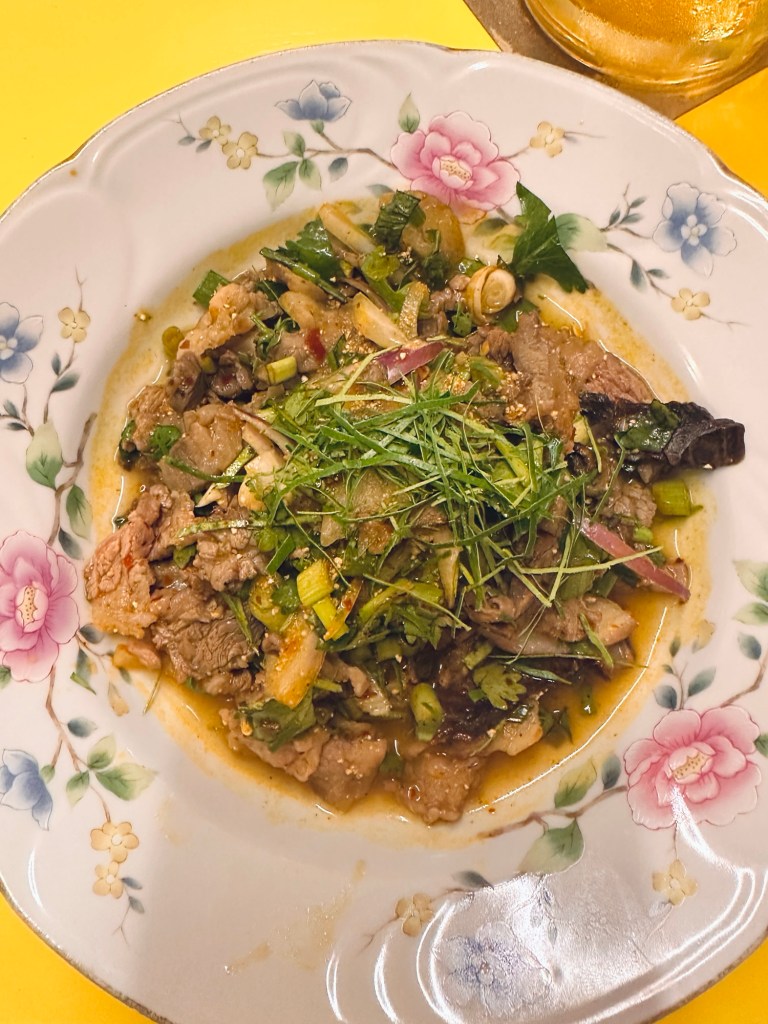
I ordered the Nam Tok Suea Isan Wagyu, a charcoal-grilled wagyu brisket mixed into a spicy, tangy salad. If you love bold flavors, this one hits. They also offer a traditional version made with cow’s blood or bile. I wasn’t feeling quite that adventurous that day, though I’ve heard Anthony Bourdain tried a similar version in Chiang Mai and loved it.
Khao Kha Moo Sai Tua Jae Ta
This ended up being my favorite stop on our Michelin street food tour—even though it isn’t Michelin-recommended (yet). It should be.
The pork leg is simmered in broth with peanuts for who knows how long, served over rice, and practically melts in your mouth. We loved it so much we came back twice, always ordering the Pork Leg Egg with Rice.
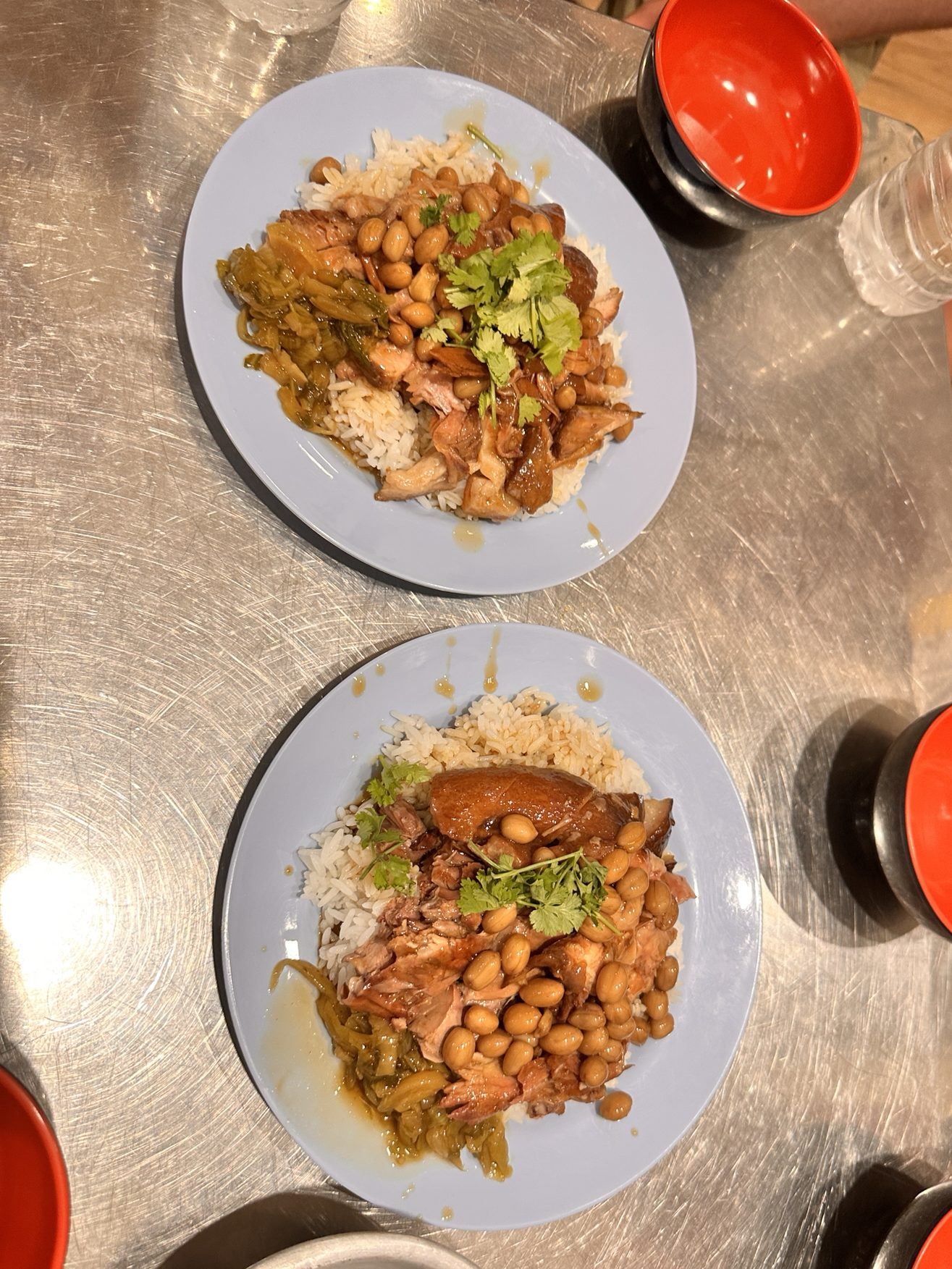
At just 70 Thai baht (about $2.20), it’s filling, comforting, and an absolute steal. It’s near Chinatown and about a 12-minute walk from Song Wat Road. The hours can be a little unpredictable, so check before you go.
Thai Tea
You don’t need to look far. Thai tea is everywhere—street carts, markets, hole-in-the-wall shops—and it’s always aggressively sweet and wildly delicious. Highly recommend trying a sip.
Where We Stayed
Ralph Hostel Bangkok
When I book accommodation, I always look for a view—and this one delivered. The hostel itself is simple, but the rooftop view is jaw-dropping. On one side, Wat Arun. On the other, Wat Pho’s illuminated temples and statues, including the building that houses the massive reclining Buddha.
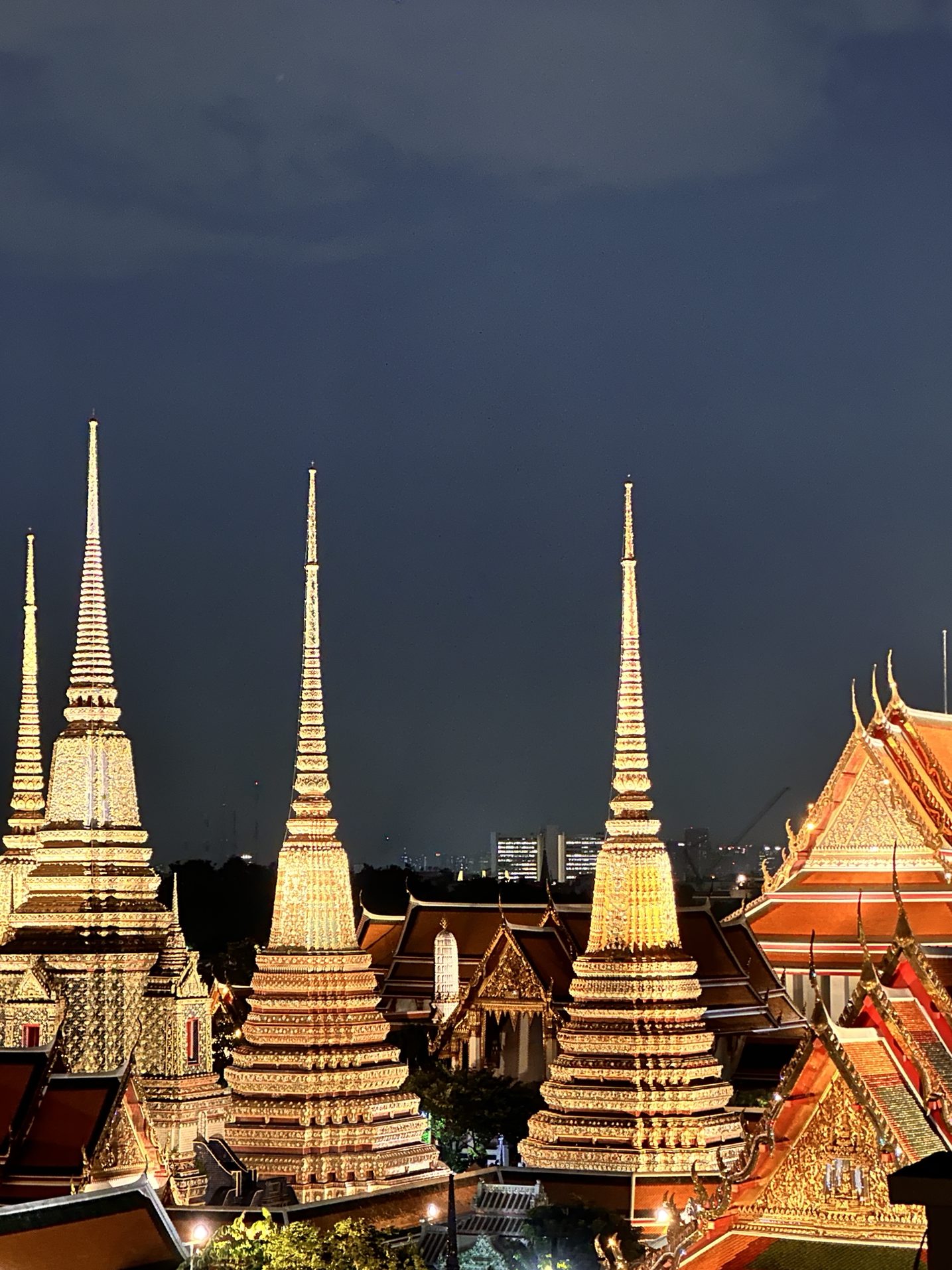
It checked all the basics: clean, central, private rooms available. There are no private bathrooms, but our group of four took up two of the three rooms on the floor, so it felt almost private.
One warning: no elevator. If you’re carrying heavy bags, prepare for the three-story climb.
Getting Around Bangkok
Grab
Grab is my go-to for getting around Bangkok. It’s essentially Uber and UberEats combined, and somehow better. Bike rides were almost always the cheapest and fastest option, and drivers usually had an extra helmet. You can even schedule rides in advance, which is perfect for airport transfers.
Tuk Tuks
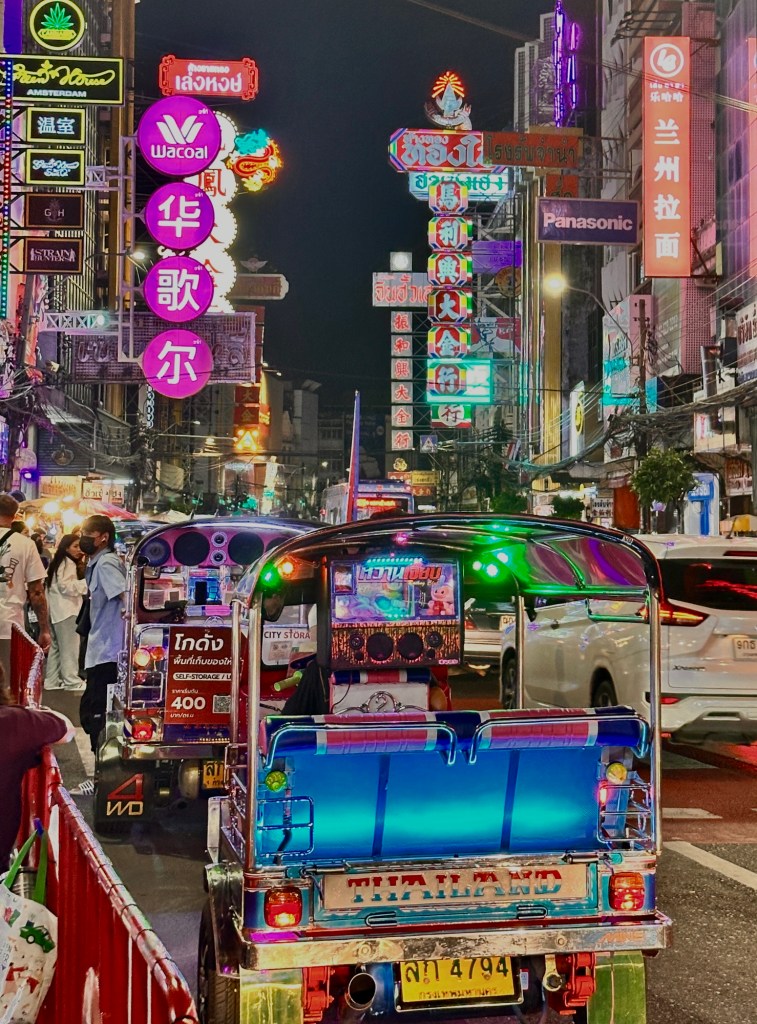
Yes, they’re more expensive. Yes, they’re worth doing at least once—maybe twice after a night out. Always agree on a price before getting in. Sometimes a negotiating a lower price means making a pitstop at the driver’s friend’s uncle’s son’s nephew’s (you get the idea) tailor shop along the way, where you’re not obligated to buy anything, but expect pressure and a bit of awkwardness. Your ride may cost less money, but will pay with lost time.
Tours & Sights
We opted for a day-tour that included Bangkok’s Train Street, Floating Market, and the Dragon Temple. All of this was $28per person. If you’d like to experience this for yourself, you can book your tour through GetYourGuide here:
https://widget.getyourguide.com/dist/pa.umd.production.min.jsTrain Street Market
Very cool. Very chaotic. Possibly too chaotic.
Similar to Vietnam’s train street, but I preferred Vietnam’s version, where you can actually sit at cafés and enjoy a drink while waiting. Bangkok’s Train Street began as a normal market before a railway was built straight through it. Instead of relocating, vendors adapted—pulling their stalls back when the train comes and pushing them out again once it passes.
The street is incredibly narrow, and with the crowds, it gets stressful fast. We were forced to move minutes before the train arrived because a vendor wouldn’t let us stand near her stall unless we bought something. The white safety line is… optimistic at best. The train passed inches from my face, and that was with my partner pressed behind me against the wall.
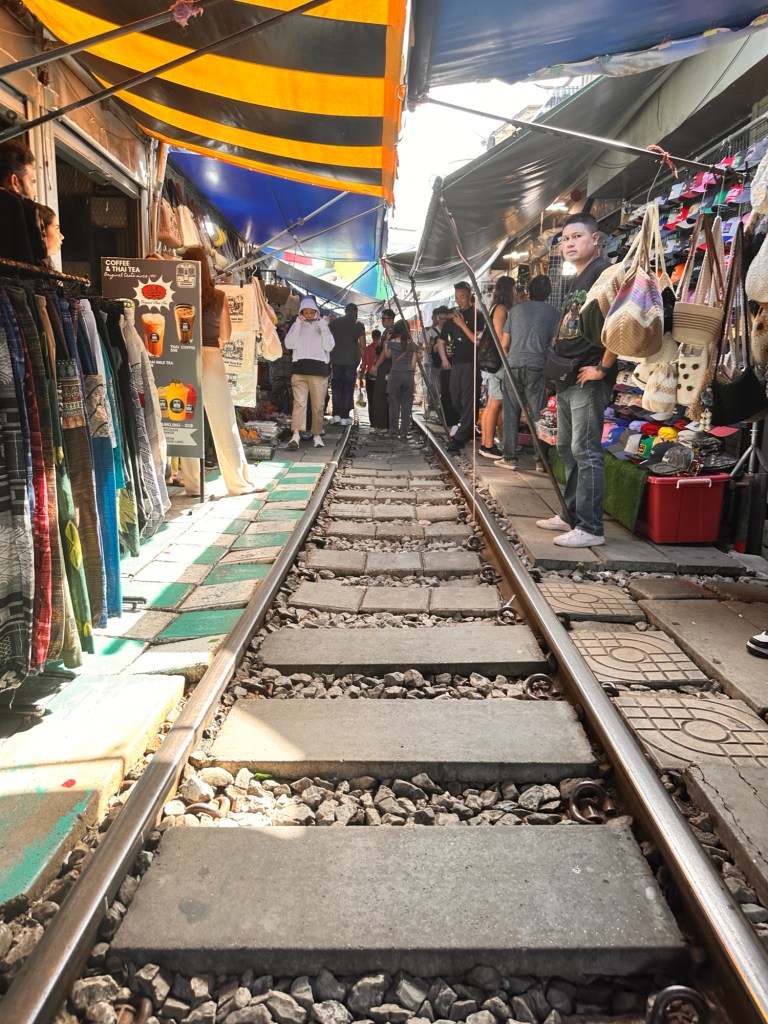
There’s also no sitting allowed. An elderly woman near us was told—loudly—to stand just minutes before the train arrived, even though she physically couldn’t. If anyone in your group has mobility issues or trouble standing for long periods, I wouldn’t recommend this experience.
Interesting to see once, but I probably wouldn’t go back—unless with a smaller group or at a less busy time.
Floating Market
This was my first floating market, and while it was interesting, it wasn’t a favorite. It felt very tourist-focused, with boats selling souvenirs and limited food options. Cash only. Our tour stopped here for lunch, but choices were minimal.
Wat Samphran (Dragon Temple)
This place is… hard to explain.
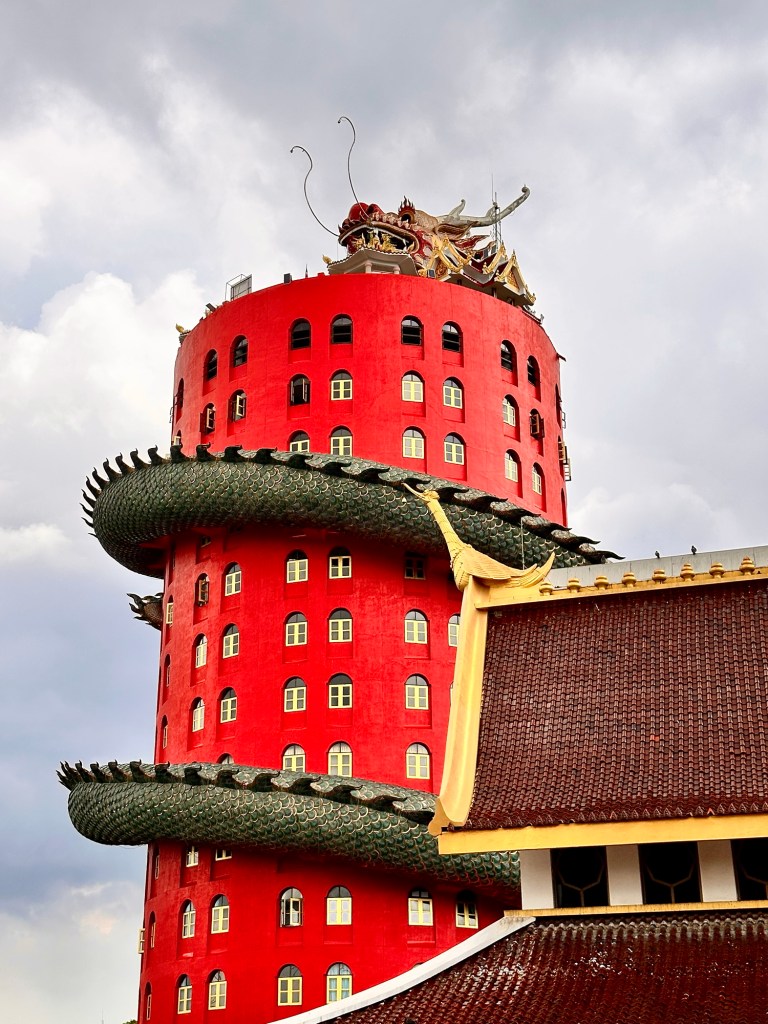
At first glance, it looks like a hotel. It’s actually a religious site that was abandoned after a scandal involving the abbot. Recently repainted bright red, the tower is 17 stories tall and 80 meters high—symbolizing the age of Buddha at death.
To reach the top, you enter through the dragon that wraps around the building and walk up a gradual incline inside it. The exterior is far more impressive than the interior, which is mostly bare. The view at the top is nice, but otherwise there isn’t much to see—and watch your head. We saw someone walk straight into a sharp overhead structure and leave bleeding.
Nearby, the grounds felt oddly abandoned, built for crowds that never came.
Giant Lizards in Lumphini Park
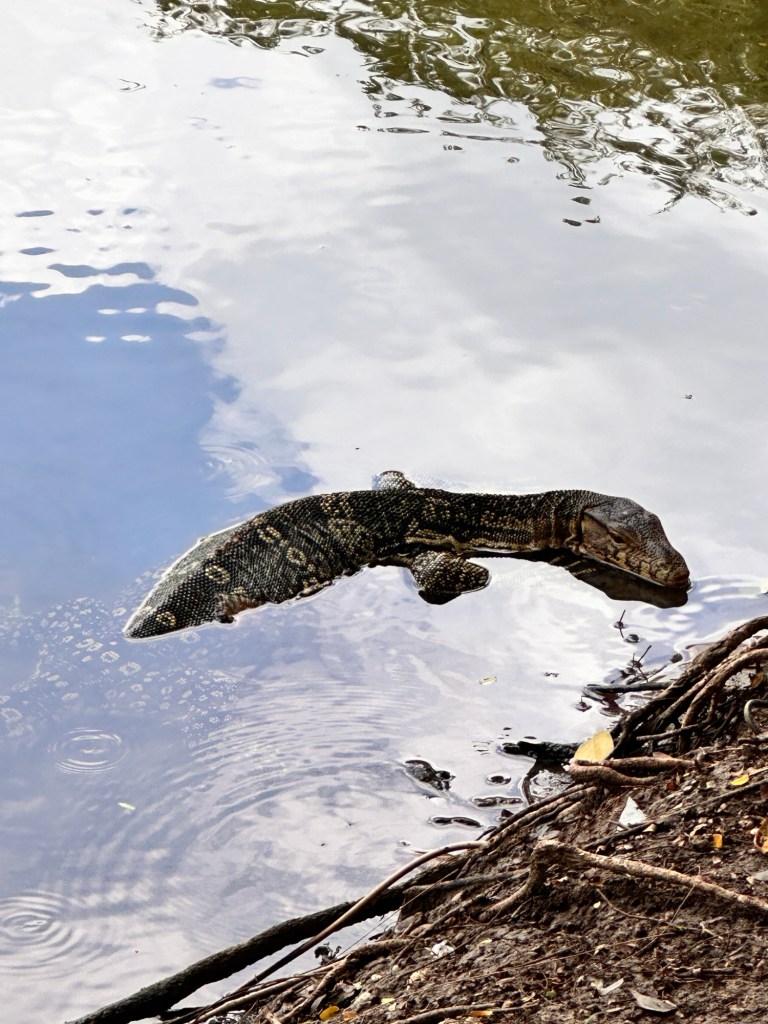
One of Bangkok’s oldest parks, Lumphini is home to massive Asian water monitor lizards—some reaching up to seven feet long. They’re harmless if left alone, and you’re almost guaranteed to see one if you wander long enough. Entrance is free.
Nearby, Hotaru 119 Omakase & Izakaya offers a 14-course omakase for around $35. We didn’t have time to go, but I’ve only heard good things. Make reservations early—it’s popular.
Wat Pho
A must-see. This royal temple complex sits next to the Grand Palace, and the earlier you arrive, the better. Dress modestly, covering shoulders and knees.
The main draw is the massive reclining Buddha—it’s truly impressive—but we also spent time exploring the grounds and the small museum dedicated to traditional Thai massage, which originated here.
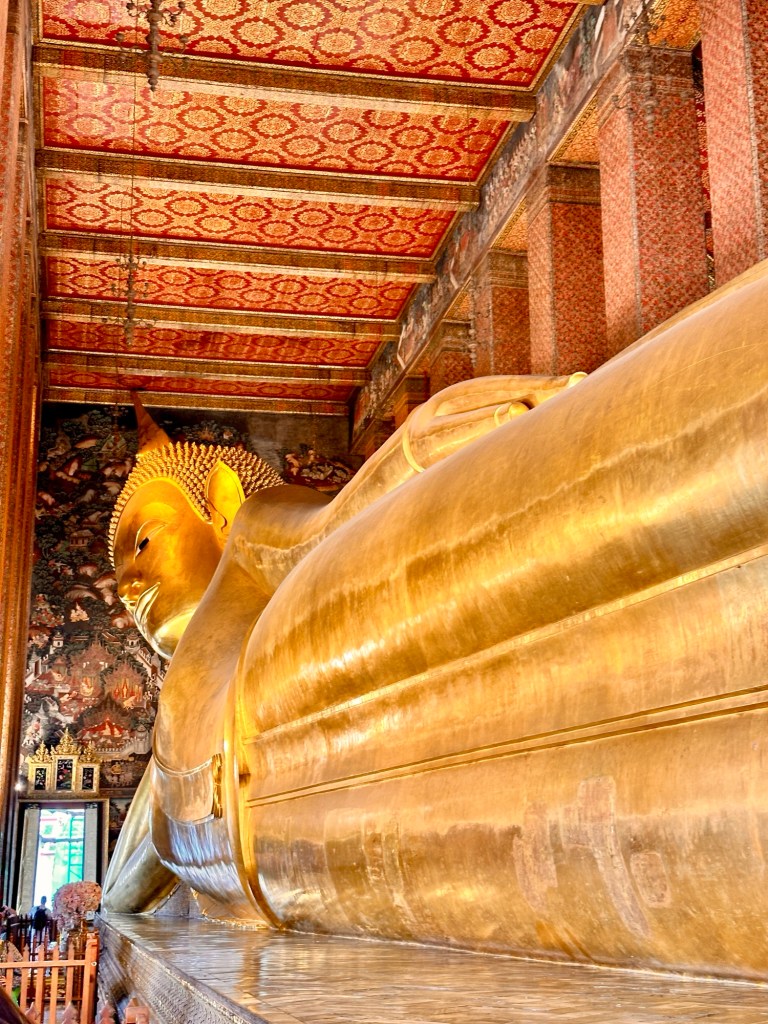
Entrance is 300 Thai baht. Watch out for scammers outside claiming the temple is closed or that the king has died. That one’s common.
Night Markets
There are countless night markets to choose from. We checked out Khao San Road, which was fun—but not my favorite. It’s the place to go if you want to try bugs, snakes, or crocodile. Entertaining once, but there are better markets elsewhere in the city.
From Michelin-recommended meals that somehow still fit the budget, to street food I’m still thinking about, to standing far closer to a moving train than I ever expected to, this city keeps you on your toes. If you’re craving something a little slower (and greener), I’ve written more about Chiang Mai—where the food is just as good, the pace is gentler, and the experiences feel more intimate. You can read more about Chiang Mai in my travel guide below.

 Resfeber
Leave a comment